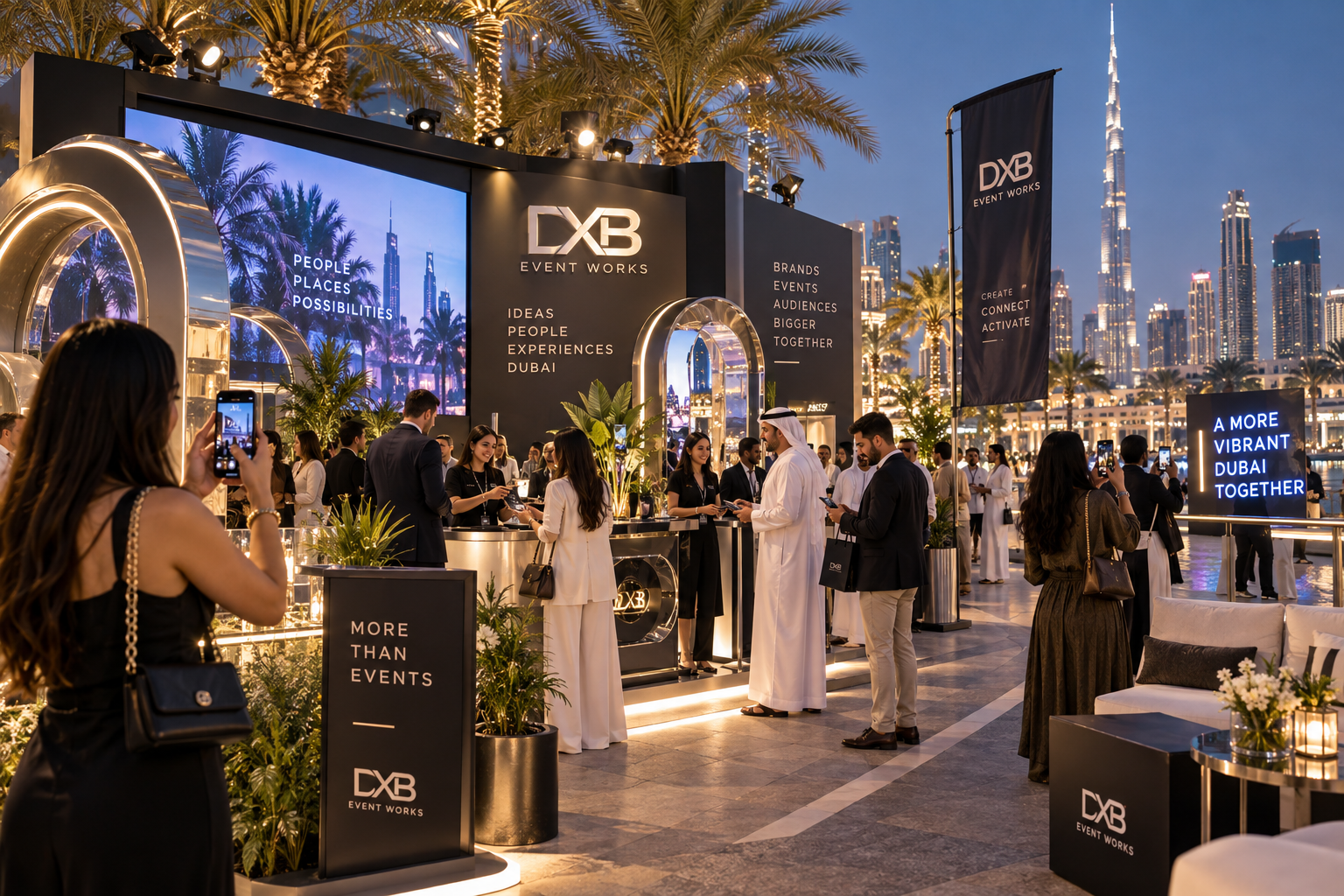
Planning a corporate event in Dubai gives you an extraordinary range of possibilities. Five-star hotels, beach resorts, rooftop venues, exhibition spaces, private event locations and outdoor settings can all sit within a relatively compact city, supported by an extensive events, hospitality and entertainment industry.
That choice is one of Dubai’s biggest advantages. It can also make planning more complicated than expected.
A successful corporate event is rarely about finding a venue first and filling in the gaps afterwards. The best events are built around a clear objective, realistic budget, suitable guest experience and a production plan that works from arrival through to the final departure.
Whether you are organising a company celebration, conference, awards dinner, product launch, team event, gala dinner or international corporate gathering, this guide covers the key decisions to make.
1. Start With the Purpose of the Event
Before looking at venues, entertainment or themes, establish what the event actually needs to achieve.
Is it primarily:
- A company celebration or anniversary?
- An employee event?
- A conference or leadership meeting?
- An awards ceremony or gala dinner?
- A client or partner event?
- A product launch or brand activation?
- A team-building programme?
- An incentive or destination event for overseas guests?
- A combination of several of these?
The answer affects almost every other decision.
A conference built around presentations, networking and content delivery has very different requirements from an anniversary party where the priority is celebration and entertainment.
Even two events with the same number of guests may require completely different venues, production, staffing and budgets.
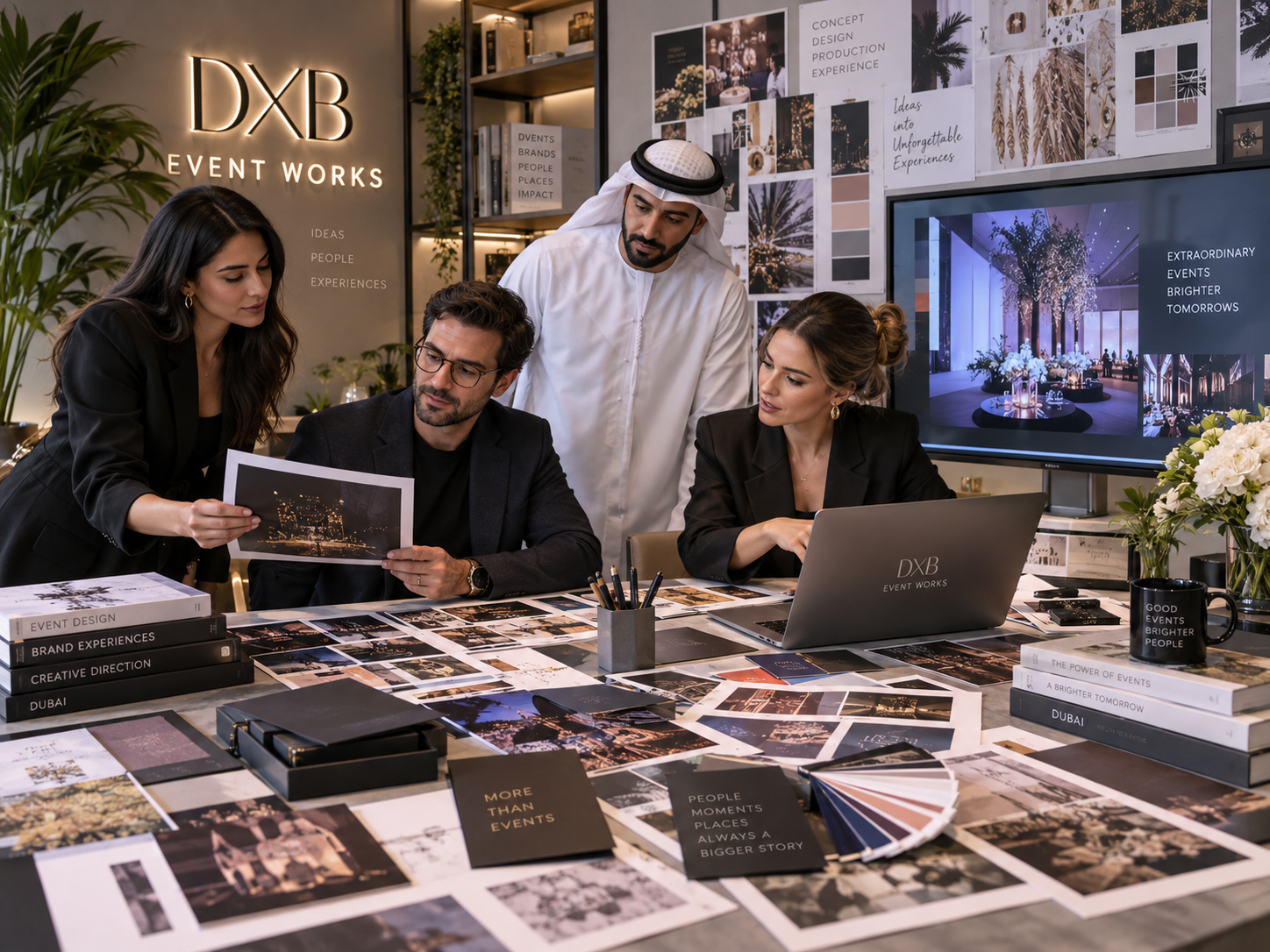
At DXB Event Works, we normally start with the fundamentals: what the event is, who is attending, what you want the audience to experience and what needs to happen by the end of it.
That creates a much stronger starting point than simply asking, “What can we do?”
2. Establish the Practical Brief Early
There are several pieces of information worth establishing before serious planning begins:
Event date and timings
Include guest arrival, event start and finish times rather than just the date.
Guest numbers
A realistic estimate is important even before the final attendance is confirmed.
Guest profile
Employees, senior executives, international delegates, families, clients and VIP guests may all require a different approach.
Venue status
Do you already have a venue, are you considering several options, or does venue sourcing form part of the brief?
Event format
Standing reception, conference, seated dinner, awards ceremony, team activity, cocktail event or full evening programme?
Production availability
What sound, lighting, screens, staging and technical infrastructure already exists at the venue?
Budget
A realistic budget range dramatically improves the quality of the recommendations you receive.
A budget is particularly important because Dubai events can vary enormously in scale. The same broad description — “corporate dinner for 200 guests” — could mean a relatively simple hotel event or a completely transformed space with custom staging, entertainment, technical production and creative design.
Without a budget range, suppliers can easily spend time designing an event that bears little relationship to what the client actually needs.
3. Choose the Venue Around the Event — Not the Other Way Around
Dubai has an enormous variety of corporate event venues.
For conferences, meetings and formal dinners, hotel ballrooms and conference venues remain a strong option because many already provide catering, guest facilities, back-of-house infrastructure and some technical capability.
Areas such as Downtown Dubai, Business Bay and the Sheikh Zayed Road corridor can work particularly well when convenient access and a central location matter.
For incentive events, celebrations and destination programmes, Palm Jumeirah, Jumeirah, Dubai Marina, JBR and Bluewaters can offer a more leisure-focused atmosphere and stronger resort or waterfront experiences.
For larger conferences, exhibitions and productions, Dubai also has major purpose-built venues including Dubai World Trade Centre and Dubai Exhibition Centre.
Outdoor spaces, private venues, beach locations, restaurants and more unusual event environments can be excellent choices too — but they can require considerably more planning around production, access, weather, power, furniture, catering and guest movement.
The venue should ultimately be selected according to the event rather than simply because it looks impressive.
Consider:
- Capacity and room configuration
- Indoor versus outdoor requirements
- Stage and production space
- Ceiling height
- Existing sound and lighting
- Screens and presentation requirements
- Catering
- Parking and valet
- Guest arrival
- Supplier access
- Load-in and load-out times
- Noise restrictions
- Entertainment restrictions
- Power availability
- Backstage and dressing-room requirements
A beautiful venue with poor access or unsuitable technical infrastructure can quickly become an expensive venue once everything required to make the event work is added.
4. Build the Budget Around the Entire Event
One of the most common planning mistakes is allocating too much of the budget to the obvious elements before understanding everything else required.
A corporate event budget may need to cover:
- Venue hire
- Food and beverage
- Sound
- Lighting
- LED screens or projection
- Staging
- Entertainment
- Event furniture
- Décor and styling
- Branding
- Registration
- Hosts or presenters
- Photography and video
- Transport
- Staffing
- Security
- Permits and approvals
- Event management
- Technical crew
- Logistics
Not every event requires everything on that list.
The important point is to build the complete picture before committing most of the available budget to one or two components.
Production is a particularly important area to understand early. A venue may advertise that it has AV, for example, but that does not necessarily mean its system is suitable for a live band, awards ceremony, large presentation or professionally produced show.
5. Think About the Guest Journey
Corporate event planning is often discussed in terms of individual suppliers: venue, catering, entertainment, AV, décor.
Guests do not experience an event that way.
They experience a sequence.
They arrive.
They find the entrance.
They register or are welcomed.
They enter the event space.
They find drinks, colleagues or their table.
They listen to content.
They eat.
They interact.
They watch entertainment.
They leave.
Every one of those transitions matters.
For example, a spectacular main ballroom is of limited value if guests spend 20 minutes queuing at registration.
A brilliant band cannot rescue an evening where speeches have overrun by 45 minutes and dinner service is still taking place.
A sophisticated conference can feel disorganised if nobody has properly planned delegate arrival, signage and registration.
Professional event planning connects the individual components into one guest experience.
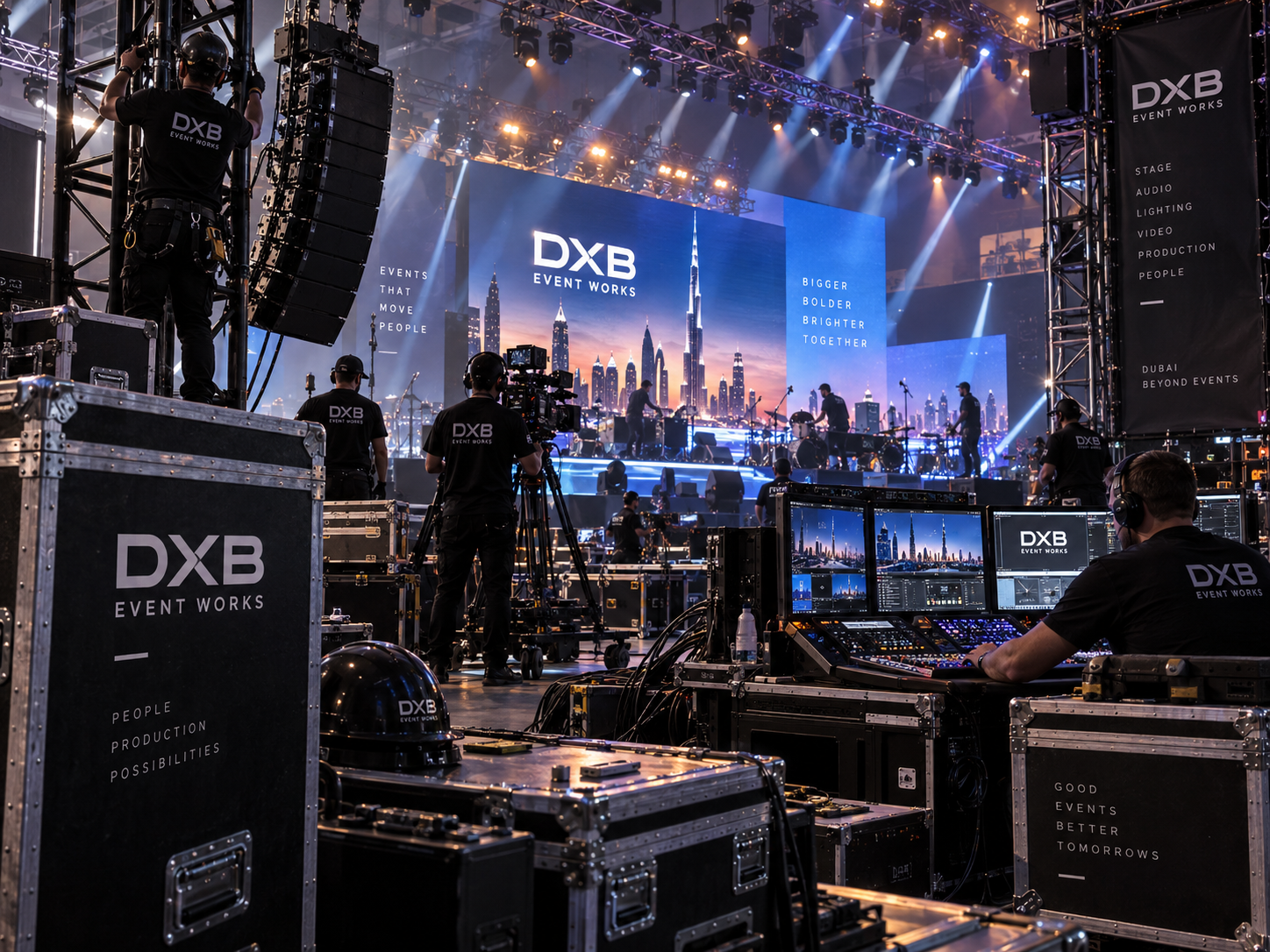
6. Plan Production Early
Technical production should not be something added a few days before the event.
Even relatively straightforward corporate events may involve:
- PA and sound systems
- Wireless microphones
- Presentation playback
- LED screens
- Stage lighting
- Ambient lighting
- Staging
- Lecterns
- Band or entertainment equipment
- Show calling
- Technical rehearsals
More complex productions might add custom stage builds, large-format LED, projection, video content, special effects and detailed show programming.
The earlier production requirements are understood, the easier it becomes to coordinate venue access, power, rigging, suppliers, rehearsals and entertainment.
It also prevents an expensive problem common in event planning: discovering late in the process that different suppliers have designed individual elements that do not work together.
7. Select Entertainment for the Audience
Dubai offers access to an enormous range of entertainment, but more choice does not automatically produce a better event.
Entertainment needs to fit the audience, venue and programme.
A corporate programme could potentially include:
- Reception musicians
- Solo performers
- Saxophonists or violinists
- Live bands
- DJs
- Interactive performers
- Walkabout entertainment
- Hosts and MCs
- Magicians
- Specialty acts
- Headline performances
- Bespoke entertainment concepts
The most effective programme often uses entertainment at different stages rather than simply booking one act for the end of the night.
Arrival entertainment can establish atmosphere immediately. Something interactive can work between formal sections of the programme. A live band may then become the main evening entertainment, followed by a DJ if the schedule allows.
The entertainment should support the event rather than compete with it.
8. Allow for Dubai Event Permits and Approvals
Permits and venue approvals should also form part of the planning process.
Dubai’s Department of Economy and Tourism states that event permits are required for organisers or venues arranging categories including business and entertainment events, with applications managed through its e-Permit system. Requirements can vary according to the format of the event, venue, entertainment and activities involved. (Dubai Department of Economy & Tourism)
Do not assume approvals can simply be dealt with on the day.
Where entertainment, temporary structures, ticketing or other regulated activities are involved, establish responsibility for the relevant permissions early with the venue and event team.
9. Build a Realistic Event Schedule
The event programme needs more than start and finish times.
A working schedule may include:
- Supplier access
- Production load-in
- Stage build
- Sound and lighting checks
- Entertainment soundchecks
- Client walkthrough
- Staff briefing
- Registration opening
- Guest arrival
- Welcome
- Presentations or speeches
- Dinner service
- Awards
- Entertainment
- Event close
- Supplier load-out
This is where individual suppliers become one event.
Changes in one area can affect several others.
If dinner runs late, for example, the awards may move, entertainment sound restrictions could become an issue and the headline performance may need to be shortened.
Good event management means anticipating those connections rather than reacting to them after something has already gone wrong.
10. Use One Clear Point of Coordination
As an event grows, the number of moving parts increases quickly.
Venue teams, caterers, production companies, entertainers, designers, photographers, transport providers and other specialist suppliers may all be involved.
Someone needs to see the entire event rather than just one piece of it.
That is the role of experienced event management.
At DXB Event Works, we bring together the planning, suppliers, production, entertainment and on-site delivery around one brief, allowing the client to deal with one experienced team rather than trying to coordinate the Dubai event supplier market themselves.
Depending on the event, we can manage the complete project or work alongside your internal team on specific areas where additional support is required.
Planning a Corporate Event in Dubai?
Dubai can deliver everything from an executive boardroom meeting to a large-scale conference, gala dinner or fully produced corporate celebration.
The key is not simply having access to more venues, entertainers or suppliers.
It is choosing the right combination for the event and making sure every element works together.
If you are planning a corporate event in Dubai or elsewhere in the UAE, send us the event date, expected guest numbers, venue if already selected, event objective and an indication of your budget.
DXB Event Works can then help shape the right approach, assemble the right team and manage the journey from first brief to showtime.
Planning a corporate event in Dubai?
See how DXB Event Works brings management, production, entertainment and specialist suppliers together around one event brief.