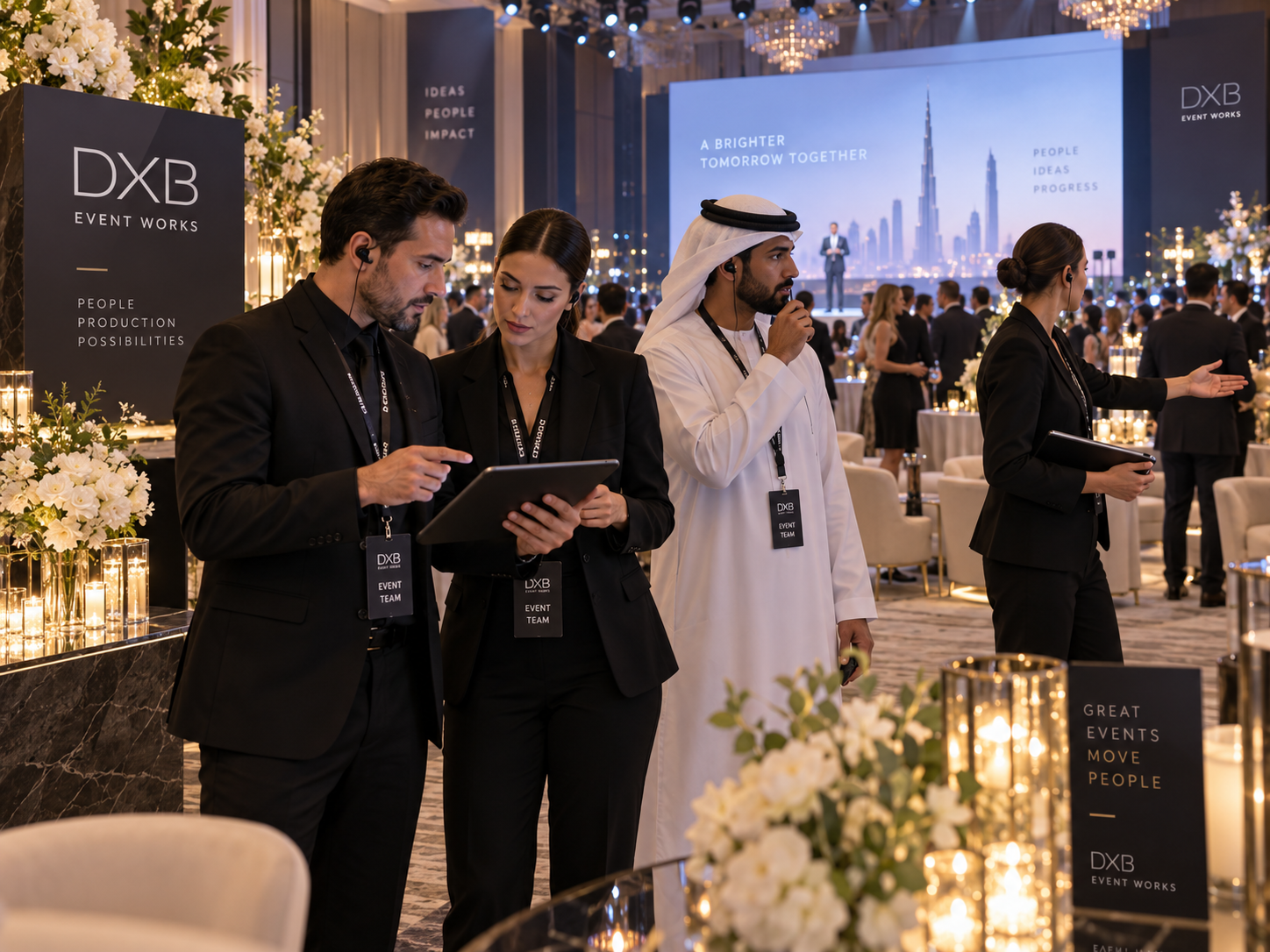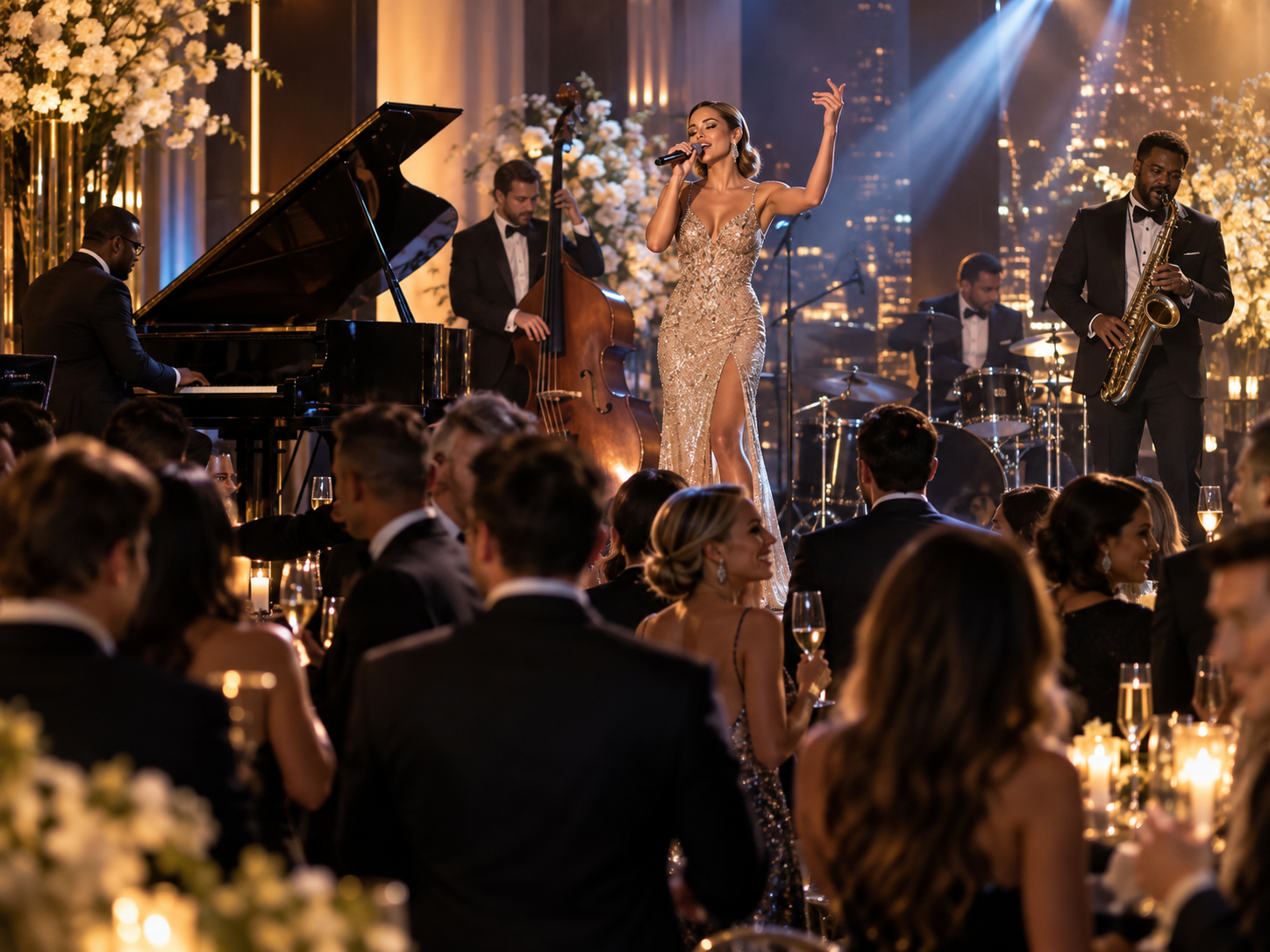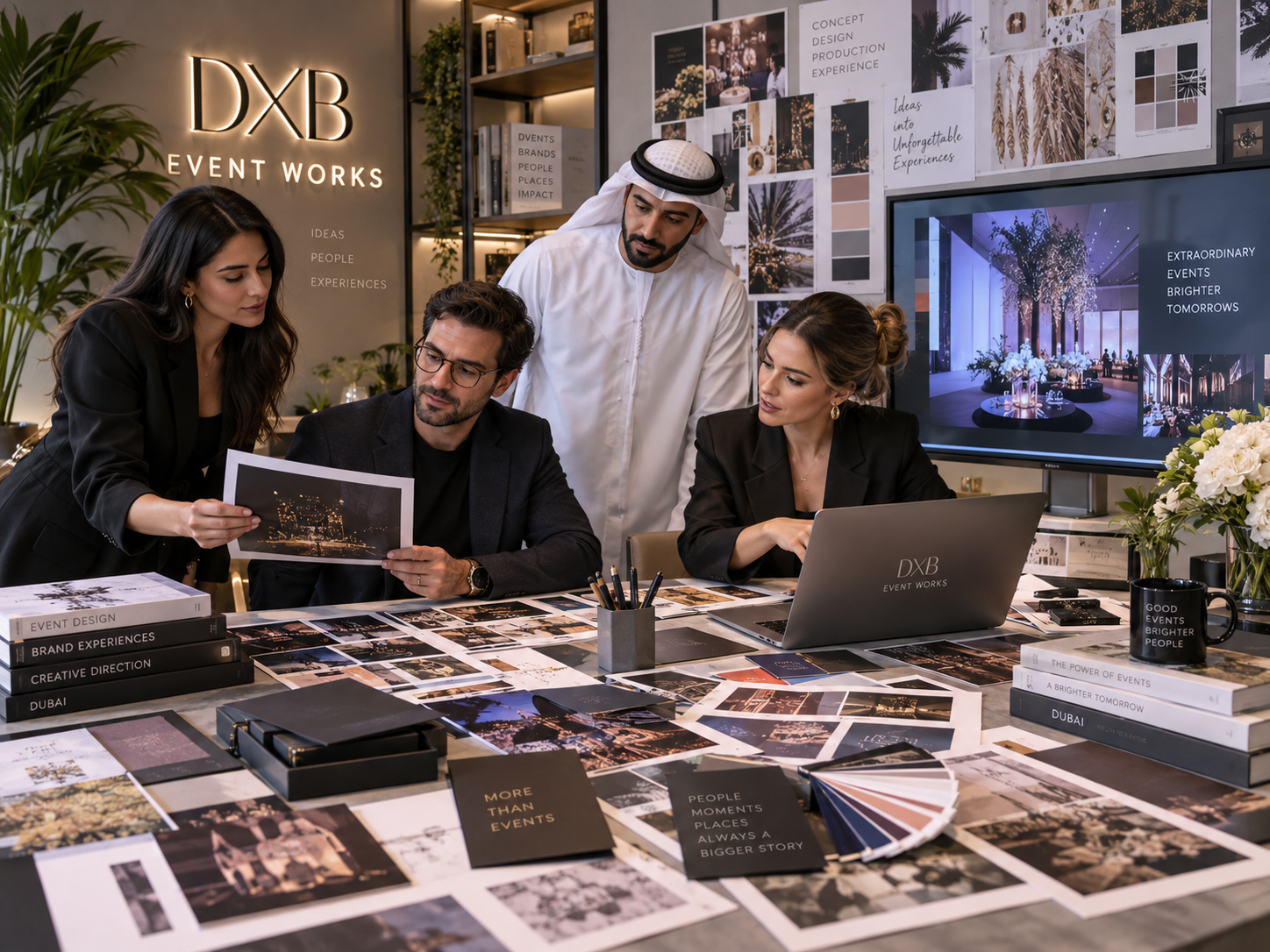
When people attend a professionally produced event, most of the work behind it should be almost invisible.
The microphones work when they are needed. Presentations appear on screen at the right moment. The stage is properly lit. Music levels change when guests enter. Speakers know where to stand. Entertainment is ready when it is called. Videos play without delay and every supplier knows what happens next.
When all of that works together, the event feels effortless.
It isn’t.
Behind a successful corporate event, conference, gala dinner, awards ceremony or live production is a combination of technical planning, equipment, people, logistics and detailed coordination.
That is what event production is really about.
Event Production Is More Than AV
One of the most common misunderstandings in event planning is treating production and AV as the same thing.
AV — audio visual — is certainly part of event production, but professional production is much broader.
Depending on the event, production can include:
- Sound systems
- Microphones
- Staging
- Lighting
- LED screens and video
- Presentation playback
- Technical direction
- Entertainment requirements
- Power and infrastructure
- Stage management
- Crew
- Rehearsals
- Show calling
- Venue coordination
- Load-in and load-out
- On-site technical delivery
The equipment matters, but the important part is making all of those elements work together.
A room containing excellent sound, lighting and screens is not automatically a professionally produced event.
Production Starts With the Event Brief
Before specifying equipment, the production team needs to understand what is actually happening.
A conference for 300 delegates might require excellent speech intelligibility, multiple presentation sources, confidence monitors and a large LED screen.
An awards dinner for the same 300 people could require dramatically different lighting, music playback, walk-up stings, award graphics, video content, entertainment and a much more detailed show sequence.
A corporate celebration might place greater emphasis on stage design, live entertainment and atmosphere.
The guest numbers may be identical, but the technical requirements are not.
The starting questions therefore include:
What type of event is it?
How many guests are attending?
What is the venue?
What is happening on stage?
Will there be speeches or presentations?
Is there video content?
Are there awards?
Will there be live entertainment?
Is the event indoors or outdoors?
What equipment does the venue already provide?
What needs to be brought in?
The answers determine the production plan.
Sound: Making Sure Everyone Can Hear What Matters
Sound is one of the least forgiving parts of an event.
If decorative lighting is slightly different from what a guest expected, most people will never know.
If nobody can understand the CEO’s speech, everybody knows.
Professional sound planning considers the shape and size of the room, number of guests, stage position and type of programme.
A conference may require several wireless microphones, presentation audio and carefully positioned speakers to provide even coverage throughout the room.
A live band requires a very different audio system, additional inputs, monitoring and technical crew.
An event combining speeches, DJs and live entertainment needs to accommodate all three.
Simply being told that a venue has a “sound system” is therefore not enough. The important question is whether the existing system is appropriate for the programme being planned.
Lighting Does More Than Illuminate the Room
Event lighting has both a practical and creative role.
At its simplest, speakers and performers need to be visible.
But good lighting can also completely change the character of a venue.
Corporate colours can be introduced subtly throughout the room. Architectural features can be highlighted. The atmosphere can change between dinner, awards and entertainment without physically changing the space.
A conference might use clean stage lighting designed for presenters and cameras.
A gala dinner may require warmer ambient lighting and more dramatic stage treatments.
A celebration with a live band or DJ may transition into a completely different lighting state later in the evening.
Lighting should therefore be designed around the programme rather than added simply because an equipment package happens to include a certain number of fixtures.
Staging and Stage Design
The stage is usually the visual focal point of a corporate event.
It might be a relatively simple platform with a screen and lectern, or a fully designed environment incorporating LED, branding, scenic elements and entertainment positions.
Good stage planning considers much more than appearance.
The team also needs to think about:
- Sightlines
- Stage height
- Screen position
- Speaker access
- Award presentations
- Entertainment space
- Backstage access
- Technical equipment
- Safety
- Photography and video angles
For events involving multiple programme elements, these details become particularly important.
A stage designed only for speeches may not work once a six-piece band needs to perform on it later in the evening.
Planning the complete programme from the beginning avoids costly changes on site.
Screens, Video and Presentation Content
Screens have become central to many corporate events.
They may display presentation slides, event branding, live camera feeds, videos, award categories, sponsor content or custom graphics.
For larger events, LED screens are often used because they offer flexibility in both size and creative design.
But again, the screen itself is only part of the requirement.
Someone needs to manage:
- Content formats
- Presentation files
- Playback
- Resolution
- Aspect ratios
- Speaker presentations
- Video cues
- Holding slides
- Awards graphics
- Backup content
Receiving 15 PowerPoint presentations from different speakers ten minutes before a conference begins is not a production strategy.
Content should be collected, checked and organised before showtime wherever possible.
Production for Live Entertainment
Live entertainment creates another layer of technical requirements.
A DJ may need relatively little beyond a suitable sound system, DJ equipment and booth.
A live band may require:
- Additional microphones
- Mixing equipment
- Stage monitors
- Instrument inputs
- Backline
- Stage power
- Soundcheck time
- Appropriate stage space
- Technical crew
Specialty performers may have completely different requirements.
This is one reason entertainment and production should not be planned independently.
Booking an act before understanding whether the venue or production setup can support it can create avoidable costs and last-minute compromises.
At DXB Event Works, entertainment and production can be coordinated as parts of the same event rather than treated as separate bookings.
Technical Direction and Show Delivery
Equipment does not run an event.
People do.
For more involved productions, somebody needs responsibility for coordinating what happens technically throughout the programme.
That might include calling:
“Stand by video.”
“Stand by lighting change.”
“Microphone live.”
“Walk-up music.”
“Entertainment ready.”
“Go.”
The complexity varies according to the event, but the principle is the same.
Everyone involved needs to know what is happening, when it is happening and what they are responsible for.
This is where technical direction, stage management and event management overlap.
Rehearsals and Soundchecks Matter
There is a temptation with corporate events to assume everything can be tested shortly before guests arrive.
Sometimes it can.
Sometimes that is exactly when problems appear.
Where the programme involves presentations, awards, video content, multiple speakers or live entertainment, appropriate testing and rehearsal time should be included in the schedule.
This doesn’t necessarily mean rehearsing an entire event from beginning to end.
It means checking the critical elements.
Are the microphones working?
Are the presentations correct?
Do the videos play?
Can the speakers see what they need?
Are lighting cues programmed?
Has the band completed its soundcheck?
Does the awards sequence make sense?
It is far easier to solve these questions before the doors open.
Venue Production Versus External Production
Many Dubai hotels and event venues have existing AV facilities or appointed technical suppliers.
That can be extremely useful.
It does not automatically mean the existing package is right for every event.
A board meeting, gala dinner, product launch and live show can have completely different requirements even when held in the same ballroom.
The most sensible approach is to establish exactly what the venue provides and then determine what additional production is actually required.
That avoids unnecessary duplication while also preventing important technical elements being overlooked.
Load-In, Access and Logistics
Production equipment has to physically reach the event space.
This sounds obvious, but access can have a major impact on event planning.
Loading docks, service lifts, security procedures, parking, restricted access times and venue schedules can all affect how much time is available for setup.
A production requiring several hours to install cannot be treated the same way as a DJ arriving with a small setup.
Large events should therefore work backwards from guest arrival to establish:
- When production can access the venue
- How long setup requires
- When testing can begin
- When entertainment can soundcheck
- When the room must be event-ready
- When doors open
The same process applies after the event for load-out.
Why One Production Plan Matters
Corporate events increasingly involve several specialist suppliers.
One company may supply the LED screen. Another may handle sound. There may be a lighting team, entertainers, content creators, venue technicians and an internal corporate team.
Every supplier can perform their individual role perfectly and the event can still fail if nobody is coordinating the complete picture.
Professional event production connects those pieces.
At DXB Event Works, we coordinate technical production, staging, sound, lighting, video, entertainment requirements and show delivery through experienced production teams and trusted specialist partners.
That means the production is designed around the event rather than assembling individual pieces and hoping they work together.
Planning Event Production in Dubai?
The right production setup depends on the event, venue, audience and programme.
Sometimes the requirement is relatively simple.
Sometimes a venue needs to be completely transformed.
The objective should never be to specify the maximum amount of equipment possible. It should be to provide exactly what the event requires and make sure every technical element works when it matters.
If you are planning a corporate event, conference, gala dinner, awards ceremony or live production in Dubai or elsewhere in the UAE, send us your event date, venue, expected guest numbers, programme and production requirements.
DXB Event Works can help establish what is already available, identify what is still required and coordinate the complete production through to showtime.
Need event production in Dubai?
Explore our production approach across staging, lighting, sound, video, technical planning and live show delivery.