A successful conference is not just a room, a stage and a schedule of speakers.
From the moment delegates receive their first communication to the moment they leave the venue, they experience a sequence of touchpoints.
Registration.
Arrival.
Signage.
Seating.
Sound.
Presentations.
Breaks.
Networking.
Catering.
Speakers.
Technical support.
Transport.
Every one of those details contributes to whether the conference feels professional, organised and worth attending.
Dubai has a strong conference and corporate events market, with everything from hotel meeting rooms and ballrooms to purpose-built conference and exhibition venues.
The challenge is not finding somewhere to hold the event.
The challenge is making all the individual pieces work together.
Start With the Purpose of the Conference
Before selecting a venue or specifying equipment, establish what the conference needs to achieve.
Is it:
- An internal company conference?
- A leadership meeting?
- A sales conference?
- A client event?
- An industry conference?
- A product or strategy presentation?
- A training programme?
- A multi-day international conference?
The format affects almost every planning decision.
An internal leadership conference for 60 people may need breakout spaces and strong presentation facilities.
A 500-person industry conference could require registration systems, a substantial stage, large-format screens, multiple speakers, sponsor branding and extensive technical production.
A multi-day programme involving international delegates may also need accommodation, airport transfers, transport and social events.
The clearer the objective, the easier it becomes to build the right event around it.
Choosing the Right Conference Venue in Dubai
Venue selection is one of the biggest decisions in conference planning.
The right venue is not necessarily the largest or most impressive.
It is the one that best supports the programme.
Consider:
- Delegate capacity
- Theatre, classroom or cabaret seating
- Stage requirements
- Screen visibility
- Ceiling height
- Breakout rooms
- Registration space
- Networking areas
- Catering areas
- Speaker preparation rooms
- Backstage access
- Production access
- Parking and valet
- Public transport
- Accommodation
- Supplier access
- Load-in times
Location also matters.
For conferences with local UAE attendees, accessibility and parking can be particularly important.
For international delegates, proximity to hotels, airports, business districts and evening activities may carry more weight.
A conference venue should therefore be evaluated as part of the entire delegate journey rather than simply by the appearance of the ballroom.
Hotel Conference Venues
Hotels remain a popular option for corporate conferences in Dubai because they can combine several requirements under one roof.
These may include:
- Conference rooms
- Ballrooms
- Catering
- Accommodation
- Breakout spaces
- Parking
- Guest services
- Existing technical infrastructure
For conferences involving international attendees, keeping accommodation and the event venue in one location can simplify logistics considerably.
It can also make networking easier because delegates remain together throughout the programme.
The trade-off is that hotel technical packages and meeting spaces vary significantly.
It is important to establish exactly what is included and whether it suits the conference being planned.
Purpose-Built Conference and Exhibition Venues
Larger conferences, exhibitions and multi-room events may benefit from purpose-built venues.
These locations can offer:
- Large halls
- Multiple meeting rooms
- Exhibition space
- Substantial production access
- Registration areas
- Back-of-house facilities
- Loading infrastructure
However, larger venues can also require more work to create atmosphere.
A large empty hall may need staging, lighting, screens, branding, furniture and technical infrastructure before it begins to feel like a finished conference environment.
Venue choice should therefore consider both the space and what is required to transform it.
Registration Starts Before the Event
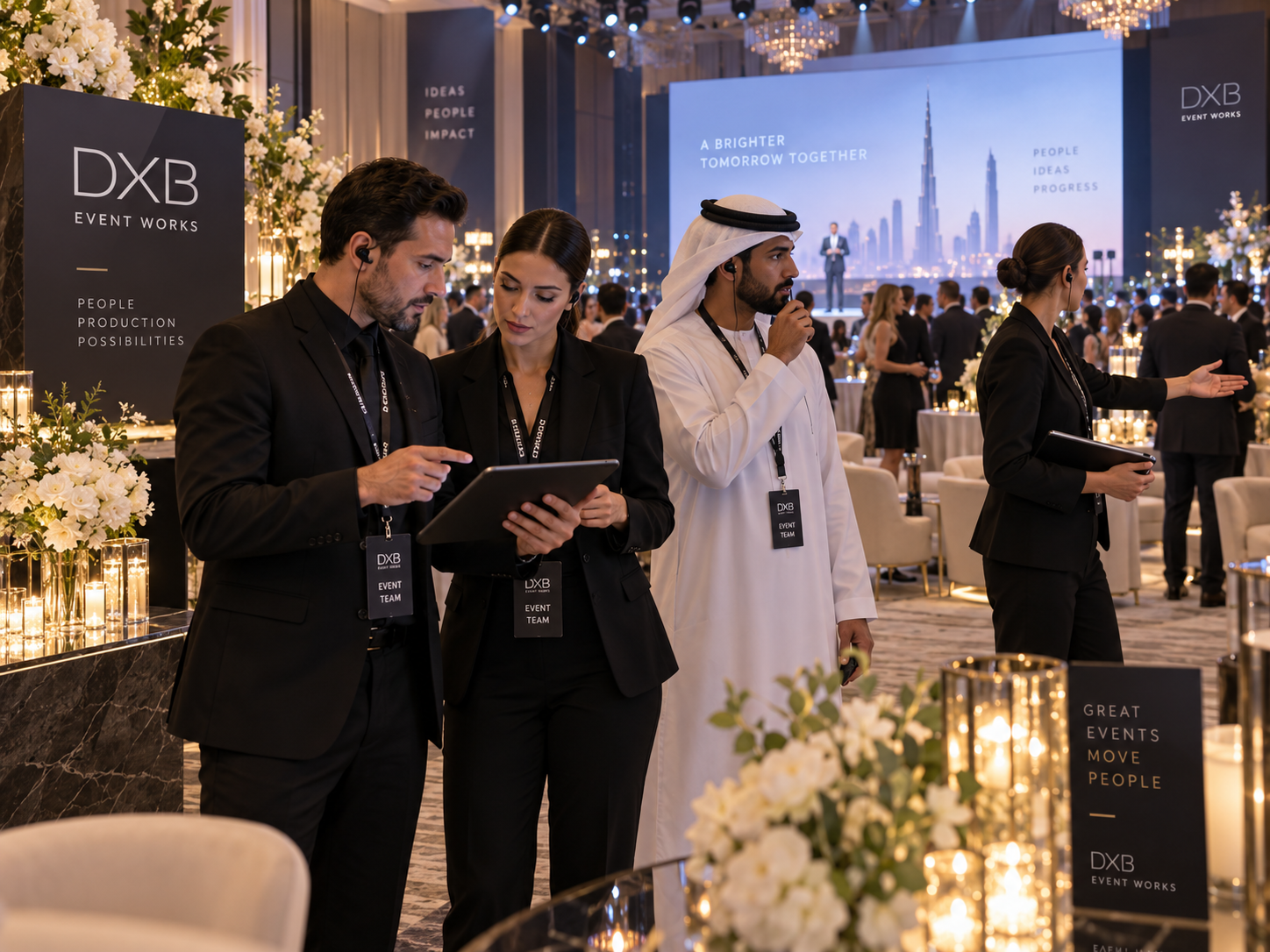
Registration is often the first physical interaction delegates have with the event.
A poorly organised check-in can create frustration before the conference has even started.
Registration planning may involve:
- RSVP management
- Delegate databases
- Confirmation emails
- QR codes or digital check-in
- Name badges
- Welcome desks
- Staff
- Signage
- On-site support
The right system depends on the scale and complexity of the event.
A conference for 50 internal employees may only need a simple guest list.
A larger event involving hundreds of delegates, sponsors and different access levels may require a more structured registration process.
The key objective is simple: make arrival smooth.
Plan the Arrival Experience
Delegates should not need to guess where to go.
From the car park, hotel lobby or venue entrance, the route should be clear.
This may involve:
- Directional signage
- Branded registration desks
- Digital screens
- Event staff
- Badge collection
- Welcome materials
- Cloakroom facilities
- Coffee or refreshments
The arrival period is also an important networking opportunity.
Allowing sufficient time between registration and the formal start of the conference gives delegates the opportunity to settle in rather than rushing directly from the entrance to their seats.
AV and Technical Production
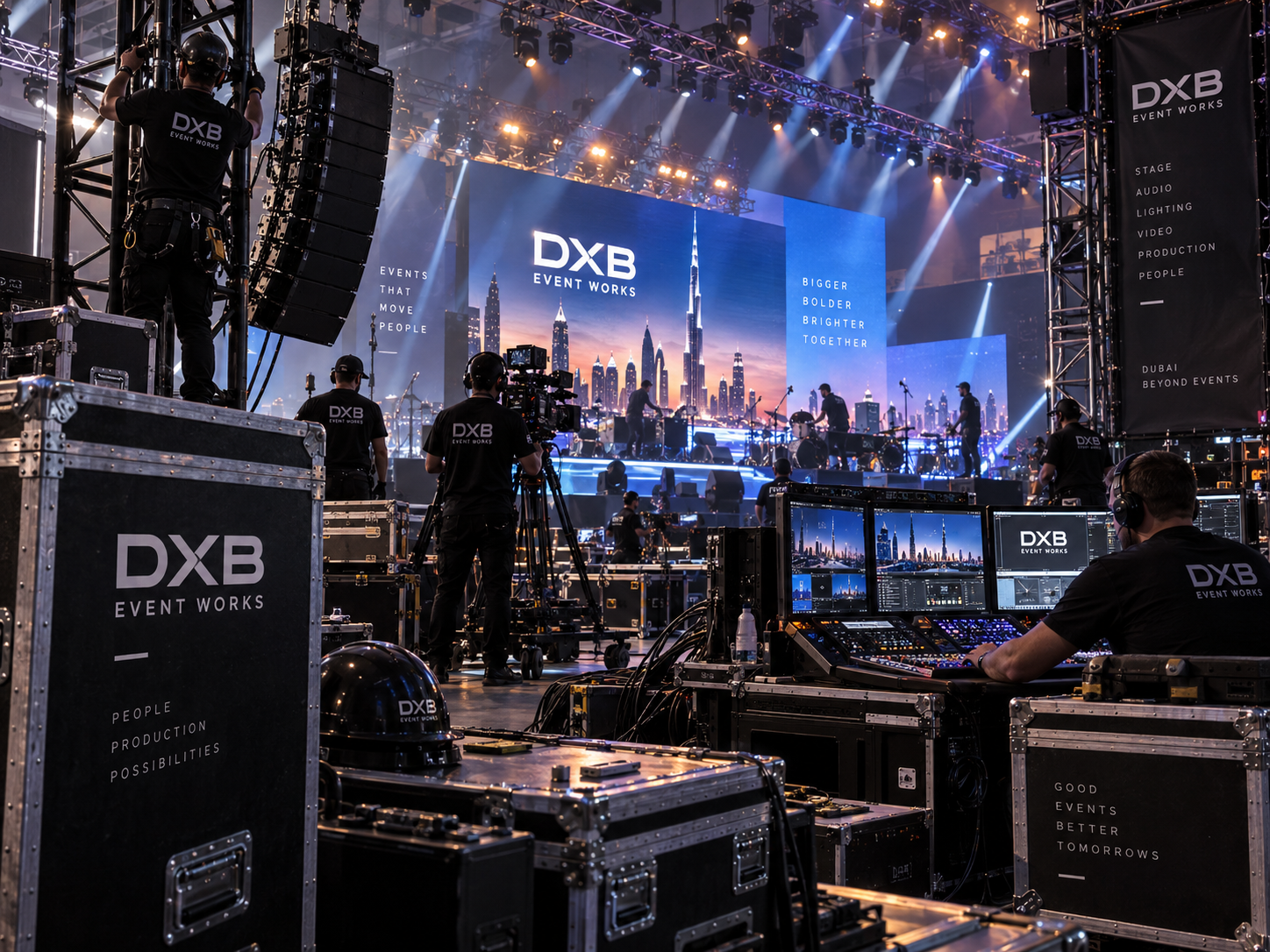
Technical production is one of the most important parts of any conference.
The audience must be able to hear the speakers clearly and see the content properly.
Depending on the format, a conference may require:
- PA systems
- Wireless microphones
- Lecterns
- LED screens
- Projection
- Presentation playback
- Confidence monitors
- Stage lighting
- Video playback
- Live camera feeds
- Recording
- Streaming
- Technical operators
The equipment itself is only part of the requirement.
The production setup should be designed around the room, audience and programme.
A screen that looks large when empty may suddenly feel very small when viewed from the back of a 600-person ballroom.
A sound system suitable for background music may not provide clear speech throughout the venue.
This is why conference AV should be assessed as part of the planning process rather than assumed to be covered because the venue provides “AV”.
Presentation Management
Speaker presentations are a frequent source of avoidable stress.
Different speakers may arrive with different laptops, aspect ratios, fonts, videos and presentation formats.
Good presentation management creates one controlled system.
Where possible:
- Collect presentations in advance
- Check file formats
- Test embedded video
- Confirm aspect ratios
- Organise the running order
- Prepare holding slides
- Keep backup copies
- Establish how late changes will be handled
Speakers should ideally not be connecting individual laptops directly to the main event screen moments before they present.
A centralised presentation system makes transitions smoother and reduces risk.
Speaker Management
Speakers are one of the most important elements of the conference programme.
They also need support.
Depending on the event, speaker management might include:
- Arrival information
- Session timings
- Presentation deadlines
- Technical requirements
- Speaker briefings
- Green room arrangements
- Microphone fitting
- Stage access
- Rehearsal
- Speaker cues
Even experienced presenters benefit from knowing exactly what will happen.
Where should they wait?
Who will introduce them?
Where do they walk on?
Which microphone are they using?
How long do they have?
What happens when their session ends?
Clear answers make speakers more comfortable and make the conference look more professional.
Staging and Room Layout
The stage should support the content.
For a simple conference, that might mean a lectern, seating and a screen.
For a larger event, the stage may incorporate:
- LED
- Branded scenic elements
- Panel discussion furniture
- Multiple presentation positions
- Camera positions
- Award presentation areas
The room layout also matters.
Theatre seating maximises capacity.
Cabaret seating can encourage interaction and note-taking.
Classroom layouts may be appropriate for training.
The format should reflect how delegates are expected to use the room.
Breakout Rooms
Many conferences need more than one space.
Breakout sessions can allow different groups to explore specialist topics, workshops or internal meetings.
When planning breakouts, consider:
- Room capacity
- AV requirements
- Session changeover time
- Signage
- Speaker movement
- Delegate movement
- Catering
- Staff support
A conference with several parallel sessions can quickly become complicated if the movement between rooms has not been planned properly.
Catering and Conference Flow
Catering plays an important role in the conference schedule.
Coffee breaks are not simply food service.
They are networking periods and natural reset points in the programme.
The timing and location of breaks should help the event flow.
Consider:
- Registration coffee
- Morning break
- Lunch
- Afternoon break
- Networking reception
- Dietary requirements
Avoid scheduling breaks so tightly that delegates spend the entire period queuing for coffee.
The catering setup should accommodate the number of attendees realistically.
Branding and Signage
Conference branding helps create a coherent experience.
It can appear across:
- Registration desks
- Stage screens
- Directional signage
- Name badges
- Digital displays
- Presentation templates
- Sponsor branding
- Printed materials
- Event apps or digital communications
Consistency matters more than simply adding logos everywhere.
Strong event branding helps delegates understand where they are, where they need to go and what the event represents.
Build a Detailed Running Order
The conference agenda shown to delegates is not the same as the working event schedule.
Behind the scenes, the team needs a much more detailed running order.
This may include:
- Production access
- Registration opening
- Speaker arrivals
- Technical checks
- Doors open
- Welcome
- Individual sessions
- Video cues
- Panel discussions
- Breaks
- Lunch
- Breakout sessions
- Closing remarks
- Networking
- Event close
For larger conferences, individual technical cues may also be included.
This creates a single reference point for the event team.
Plan the Delegate Experience
The best conferences think beyond the stage.
Delegates notice whether:
- Registration was easy
- Wi-Fi worked
- The room temperature was comfortable
- They could see the screen
- The microphones worked
- Breaks happened on time
- Signage was clear
- Catering was accessible
- Staff could answer questions
- Transport was organised
- Sessions finished when expected
None of those elements are particularly glamorous.
Together, they determine whether the event feels professionally managed.
International Delegates
Dubai regularly hosts conferences involving overseas guests.
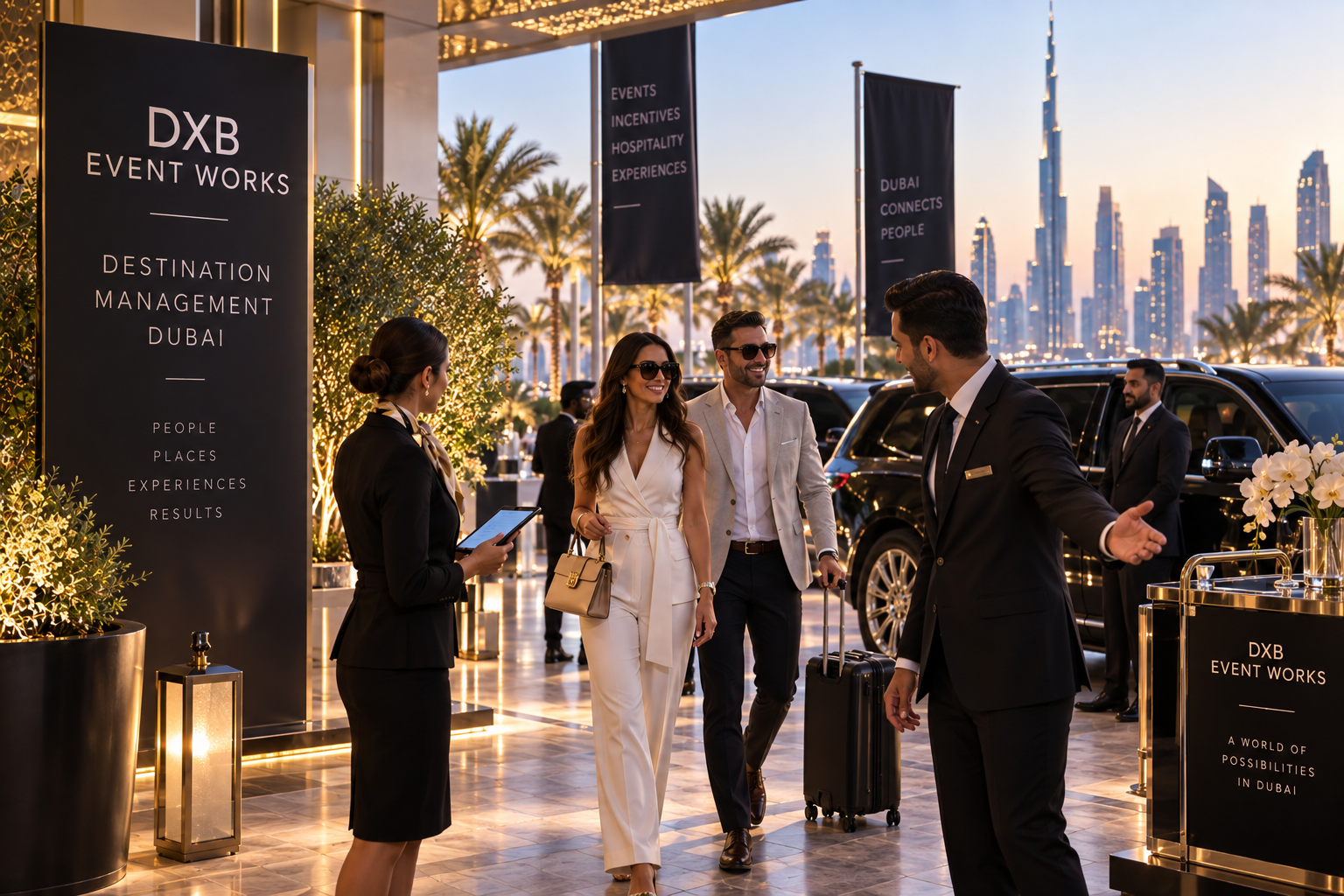
For international delegates, the conference experience may begin long before they reach the venue.
Planning can extend to:
- Airport transfers
- Hotel accommodation
- Group transport
- Welcome desks
- Delegate communications
- Dining
- Networking events
- Activities
- Local experiences
This is where conference management and destination management often overlap.
A company bringing delegates to Dubai may need support with the complete programme rather than the conference room alone.
Conference Management Should Bring Everything Together
A conference can involve a large number of separate suppliers.
The venue.
Production team.
Registration provider.
Speakers.
Catering.
Transport.
Branding.
Photographers.
Entertainment.
Accommodation.
Each may be responsible for one part of the event.
Someone still needs responsibility for the complete experience.
At DXB Event Works, conference management can bring venue coordination, registration, AV, staging, speakers, suppliers, schedules and delegate experience together through one experienced team.
That allows the client to focus on the content and objectives of the conference while the event infrastructure is managed around them.
Planning a Conference in Dubai?
Start with the fundamentals.
What is the purpose of the conference?
When is it?
How many delegates are attending?
Are they local or international?
Do you already have a venue?
What does the programme involve?
What technical production is required?
What budget is available?
Once those questions are clear, the right venue, production setup and delegate journey become much easier to define.
DXB Event Works can support conferences across Dubai and the UAE, from individual event services to complete conference management from first brief through to final delegate departure.
Planning a conference in Dubai?
Explore our conference management approach across venue coordination, AV, registration, speakers, schedules and delegate experience.